


Beyond the distraction of high-profile promotions for the biggest and most powerful new pickup trucks, there are in fact technology innovations in construction machinery that actually build things better and faster.
Key construction equipment innovations introduced during 2025 include the expansion of electric, hybrid and hydrogen-powered machines across most of the construction site. AI-assisted equipment that monitors tasks, predicts needs and performs complex functions with less human oversight is becoming more common.
These help to address workforce shortages and improve safety. Road pavers and rollers that use ground-penetrating radar to read material density in real time are now available, thereby eliminating core sampling tests while ensuring regulatory requirements are precisely met.
Almost every equipment manufacturer now offers a selection of electrically powered site equipment. What once started at the smaller size of the lineup is getting ever larger.
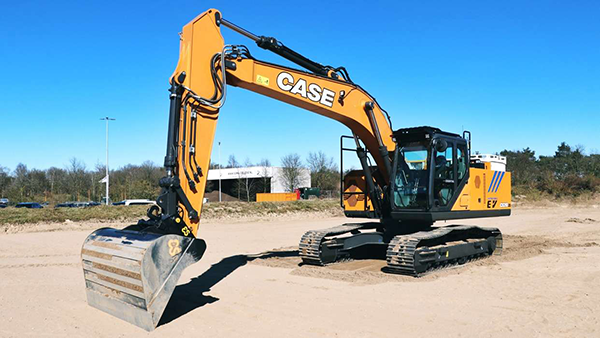
CASE now offers a full-size electric excavator designed for intensive use. The , built in co-operation with MOOG, features a modular ZQUIP battery system for rapid battery swaps to keep the excavator operating with minimal downtime while delivering powerful performance. This allows operators to maintain working patterns throughout the day, boosting productivity across a range of jobsites.
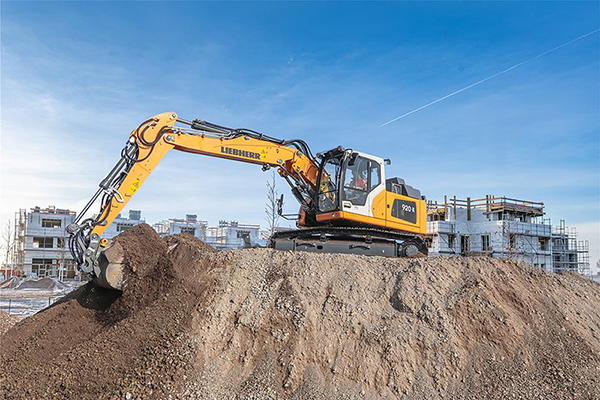
In July, Liebherr-France SAS introduced the , the company’s first battery-powered electric crawler excavator. The company says depending on the application, the R 920 G8-E can achieve an operating time of six to eight hours without intermediate charging. This increases to 10 hours with a one-hour intermediate charge at 150kW. The operator’s cab features a new futuristic design with large windows and ergonomics ensuring excellent visibility and operator comfort.
However, transitioning from diesel power to electric machinery is a serious capital cost consideration for any construction equipment OEM.
To address this, Perkins introduced its solution at bauma 2025 — its . Off-highway OEMs can now seamlessly transition from diesel to a battery electric powertrain, reducing the need for them to invest in costly engineering and design projects. This allows OEMs to electrify their machinery quickly and cost-effectively without sacrificing performance, says Jaz Gill, Perkins VP of global sales, marketing, service and parts.
“It can be ‘dropped in’ to a machine to replace a diesel engine,” said Gill. “The system consists of a Perkins battery along with inverters, motors and onboard chargers – all packaged up into a compact drop-in system to support seamless transition from diesel to electric for our customers looking to make that move.”
However, not all of this year’s electric equipment innovation involves moving earth.
At bauma 2025 in Munich, Joseph Vögele AG presented the , the company’s first fully-electric compact paver. The company says in combination with extending screed, the SUPER 1300-5e offers pave widths between 1.8 metres and 4.2 metres, making it the ideal choice for small and medium scale road construction projects.

The liquid-cooled ion battery from Kreisel Electric has a storage capacity of 126kWh and works with 400V in the high-voltage range. Depending on the paving method, it provides sufficient power capacity for a full working day.
One of many areas where AI is making an impact is in road paving, where consistency in paving density is critical to the long life of the newly-laid surface.
The HAMM from the Wirten Group measures and continuously records asphalt density in real-time and automatically adjusts the compaction performance and modes in both drums. This enables more precise compaction, leading to optimal asphalt quality regardless of operator experience or external conditions.
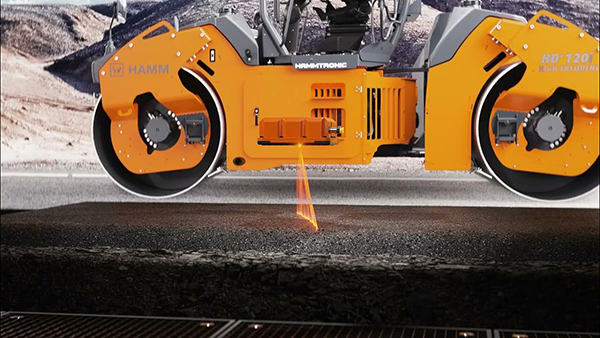
The HAMM assistant also takes both external temperature trends and the cooling behaviour of asphalt into account for optimally-adjusted compaction. The result is reduced rework, the potential for the elimination of core sampling tests and extended road lifespan, all of which contribute to cost savings.
Intelligent technologies like Kubota’s system can identify machine attachments and automatically adjust settings for optimal performance and reduced operator error.
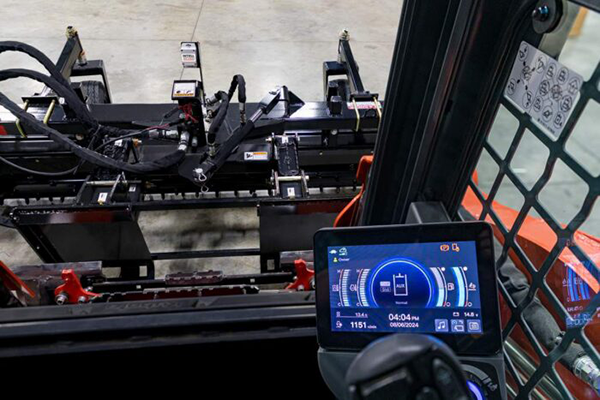
When used on a Kubota SVL97-3 track loader, for example, the Intell-Attach system wirelessly recognizes Land Pride attachments through an RFID-style tag. The system can then automatically adjust the machine’s hydraulic settings to match the specific attachment, ensuring the power unit is never either over or underpowered.
Real-time communication between the attachment and the loader provides valuable feedback, enabling precise control. This helps operators minimize errors, speed up jobsite setup and get the most performance from each attachment.
Heavy construction site equipment is continually and rapidly evolving through advances in automation, electrification, digital connectivity and advanced safety systems. This is boosting productivity, reducing emissions and transforming traditional building practices worldwide.
John Bleasby is a freelance writer. Send comments and Climate and Construction column ideas to editor@dailycommercialnews.com.

Recent Comments
comments for this post are closed