

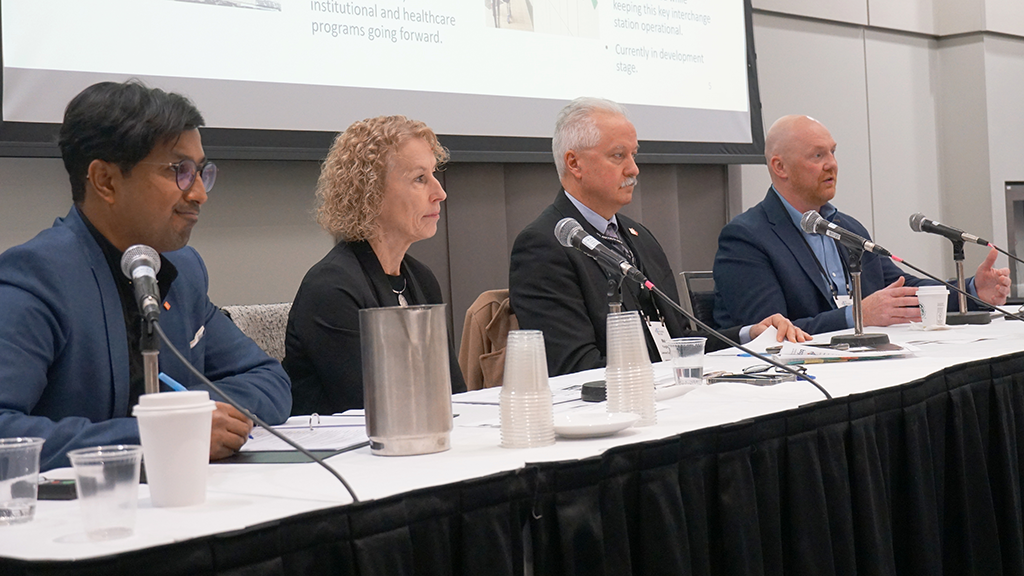
Progressive design-build (PDB) models are emerging as an alternative to traditional delivery methods, driven partly by owners’ desire for early design and construction input and by mechanisms that foster collaboration among all parties.
Some see other forces behind the shift away from conventional delivery models.
“The reality is that contractors don’t want to participate in lump sum work,” said Cian Murphy, senior vice-president, major projects with CIMA+.
“The construction industry drives the market in 17³ԹÏÍø, despite what everybody might think,” Murphy told an audience recently at a seminar on PDB delivery models at the Buildings Show in Toronto.
Murphy cited an instance where an owner of a $1.5 billion project in Toronto could not get any bids if the contract was tendered as a fixed-fee job.
“There is so much work out there that contractors can pick and choose what projects they want to participate in, so they really drive the owners to look at alternative models.”
PDBs are not without challenges.
According to a study on the experiences of PDB users, managing costs during the design development phase is one of them.
Design and contract partners, furthermore, can be reluctant to lead the approvals process in some instances involving third party approvals, and risk management can be overlooked for design and pricing, said Taha Syed, Stantec Consulting’s program controls manager and the author of the study to be released early next year.
Syed, who moderated the Buildings Show seminar, said the study is “a snapshot” of PDB delivery, based on the findings of 10 owners, 11 consultants and one technical adviser/architect.
Syed said the data for his study reflects large, complex projects where PDB delivery is most commonly used but the findings do not represent all PDB projects.
The majority of the PDB projects are transit infrastructure, followed by health care and other public projects.
He said about a third of the study’s respondents believed PDB provided better cost control, while a third favoured traditional models. The remaining third was uncertain.
Twenty-three per cent of respondents believed PDBs deliver quicker projects.
Syed pointed out there is some concern with PDB models that there is a disincentive for parties to maintain schedule during design development. Furthermore, project agreements can be inflexible on transitioning from design to implementation.
Syed’s study found 60 per cent of respondents believe PDB offers better risk control, while only 18 per cent preferred traditional models.
Seminar panellist Mel Yungblut, vice-president of quantity surveying, Lakeland Consulting, said a lot of people think risk management stops at including a contingency in the target price or as a reserve in the project.
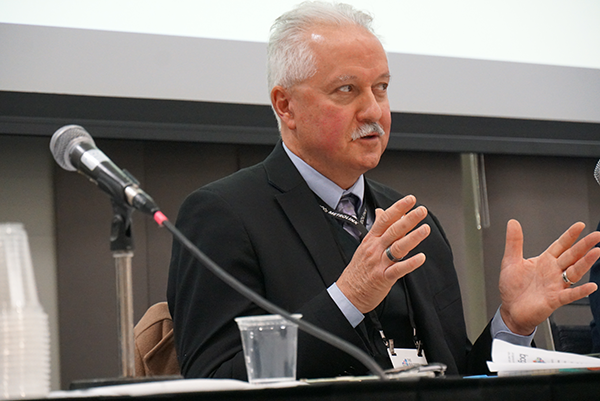
“The rubber hits the road on risk management after you have developed all that and it heads into construction.
“The essence of good risk management comes from the entire party,” Yungblut told the seminar audience.
Syed’s study found about 23 per cent of respondents believed PDBs deliver quicker projects.
“Overall, I think the challenges are less about the model itself but more about the team’s readiness and alignment,” he added.
Panellist Elisa Brandts, vice-president, regional business leader for Buildings at 17³ԹÏÍø West with Stantec, said on many projects consultants don’t have “good visibility” on the cost model, which is even a challenge in Integrated Project Delivery projects where it is mandated.
She said anyone stepping into the world of PDB should choose their team carefully and implement a “fair and open” procurement plan.
“Understand this should not be a race-to-the-bottom procurement method.”
Brandts said probably one of the biggest challenges in the industry concerns low bid which often does not lead to the best results because the industry has costs to cover “and you get what you pay for, certainly in consulting.
“I think that is one of the reasons owners are looking for more collaborative models.”
They can provide best value for the money, but they aren’t a solution if the project is underfunded, she added.
Murphy told the seminar audience PDBs are not a “one-off” solution.
“Your first one is going to be expensive. You need consultant costs, training per team. Once your organization becomes culturally aware, experienced, then you can use it for (even a) $50,000 job because this just becomes how you work,” he said.
Recent Comments
comments for this post are closed