

Leadership, adaptability and collaboration are all vital ingredients for operational excellence, according to a recent panel.
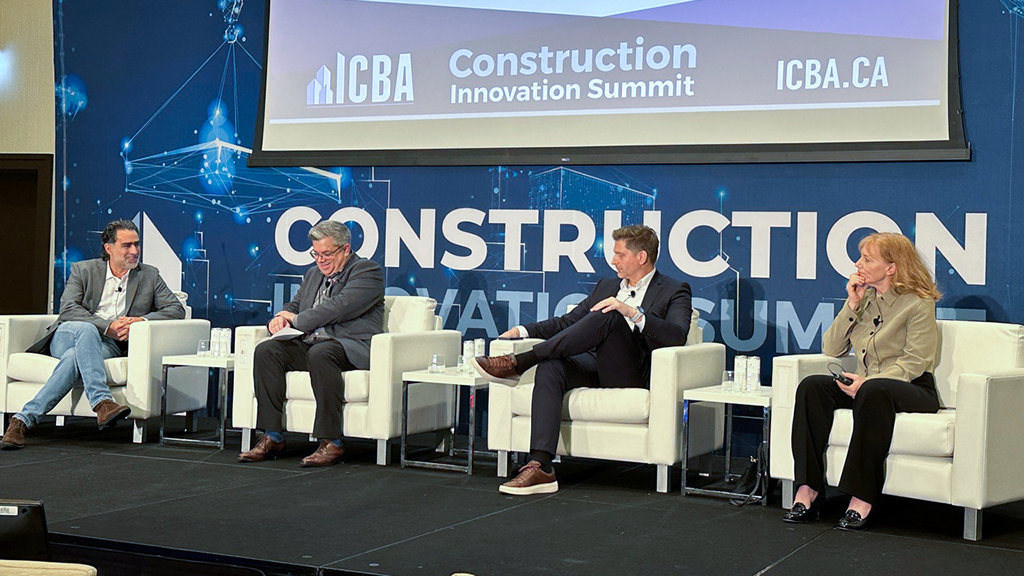
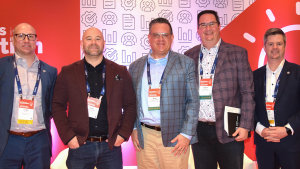
Construction leaders from across the Lower Mainland compared practices at the From Field to Office: Excellence in Construction Operations panel at the Independent Contractors and Businesses Association’s (ICBA) Construction Innovation Summit held Oct. 2 in downtown Vancouver.
The panel was comprised of Townline vice-president of construction Michael Brimer, Kinetic Construction director of operations Bruce Vasarhely and Fraser River Pile and Dredge (FRPD) president and CEO Sarah Clark. Prism Construction COO Reza Norozy moderated.
Norozy began by asking the panellists what barriers they’ve eliminated within their organizations that had the biggest impact on operations.
Vasarhely stressed the adoption of LEAN practices made the most difference for Kinetic’s operational efficiency, but adopting it meant “getting the right bums in the right seats.â€
“With the right personnel, we had the launching pad,†he said.
Brimer said Townline endeavours to avoid siloing different parts of the company.
“We have development, property management, construction and we make sure there’s cross-pollination of teams. That can be as simple as grabbing coffee or more formal teambuilding,†he said.
Clark pointed to FRPD’s shift a decade ago to joint ventures rather than working as a subcontractor as key to strengthening the company’s operations.
“That changed the way we did everything. It changed the way we thought about ourselves, brought discipline and enabled growth for individuals within the company,†she said.
Norozy said Prism’s challenge was integrating different departments and ensuring a flow of information. He asked the panellists how their organizations addressed those issues.
“We’re small enough that people know each other, but the office can’t just be in the office and field can’t just be in the field,†Clark said.
“Projects don’t start on time, we have to make up that time, and we face a tremendous amount of pressure, so we have to be out there with the team,†she added.
“It ultimately comes down to how the teams respect each other. I don’t care if you’re cleaning the trailer or the CEO, we’re all human and deserve respect,†Brimer said.
“When I started it was, ‘you count the beans and I’ll get it built’ and obviously that isn’t healthy and doesn’t work,†Vasarhely said. “We all have a role to play and nobody is an island unto themselves. (One person) doesn’t have to take on all the stress to build these buildings.â€
Operations also count on trust and accountability. Brimer said he’s a “huge fan of co-located sites, if you have the means.â€
“From a trades perspective, getting the construction managers in a trailer can break down a lot of these challenges,†he said.
“Sometimes you have to be the person who says it’s OK to stop for a minute,†Clark added. “Construction is frenzied, but sometimes you have to take a step back and bring everyone together in order to find a better way.â€
New tools and resources are also an issue, Norozy said, and asked the panel how they navigate technology through a construction lens.
“For construction to move forward you have to be open minded and take advantage of what’s available, but it’s a sea of what’s available and you can’t lose sight of the fundamentals,†Clark said.
“There’s lots of temptation to jump on board with good sales speeches, but get back to basics. What’s the problem we’re trying to solve?†Vasarhely added. “Are there tools that are better than the analog ones we already have?â€
“It comes down to being curious. AI feels like the new hot topic but it’s evolving quickly,†Brimer said. “We need to play with the tools first in order to run with it.â€


Recent Comments
comments for this post are closed