

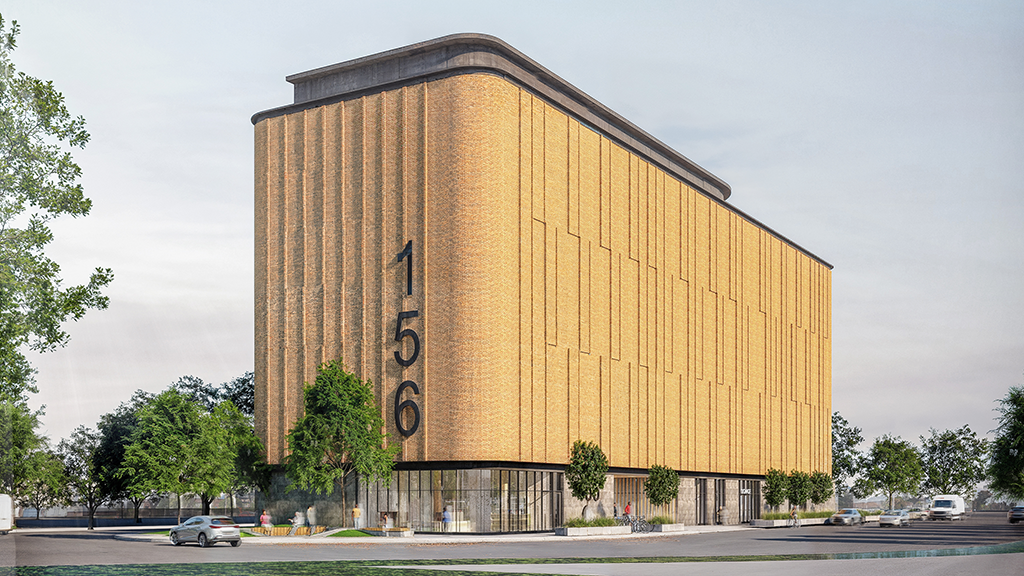
At a time when developers face new challenges with the demand slump in the commercial sector, a Toronto developer is proposing an 87,000-square-foot data centre in a business park in Leaside, Toronto.
The seven-floor digital hub, a project by Beeches Development Inc., could break ground next year if a prime tenant is secured, says company president Charles Goldsmith.
“We have the space, the location and the approvals,� he says, adding Beeches will tailor the design to suit the needs of the lessee.
A seasoned developer, Goldsmith says it is his first experience with a data centre.
“It’s basically a seven-storey refrigerator with a lot of horsepower.�
The design of the building strays from conventional building norms.
Structural systems have to be robust to carry the loads of heavy specialized computer equipment and the complex mechanical electrical systems that serve them, says Zenon Radewych, a principal at WZMH Architects, who has 25 years of experience in the design of data centres.Â
He says unlike most buildings where design is led by architects, engineers and operations teams often are at the helm of digital centres. Â
“Form follows function and it is very much driven by mechanical, electrical and IT systems.�
The architect says the appetite for energy can be many times that of a conventional building.
“You need multiple generators, multiple chillers, multiples of air handling equipment and a lot of redundancy levels to make sure the building remains operational.�
A building relies on UPS (uninterruptible power supply) systems, sophisticated mechanical systems and such things as specialized cable trays for communications that need “layers and layers of copper and fibre,� says Radewych.
“It is heavy stuff.�
Goldsmith says floor loading capacities for the Leaside building are 200 pounds per square foot (psf) or so, 50 to 100 psf more than conventional buildings.
While there was a time when a data centre might have looked like a plain, windowless box, Radewych says city planning departments expect more from developers today.Â
“There are more eyes on these buildings, so the architectural expression has to be raised many bars.�
To break the monotony of a monolithic seven-storey box, the conceptual design of the Leaside project features a façade with brick relief. It is by project architect Greg Latimer of mcCallumSather, says Goldsmith.
The developer says because of the high security requirements of a data centre, the property will have round-the-clock security personnel and a surveillance monitoring system.
The ground floor will be built of poured concrete to highway crash standards, he adds.
Beeches Development chose a data centre for the site largely because of the market demand.Â
Goldsmith had originally planned an office building on the property but the pandemic quashed the venture and a follow-up plan for a life sciences wet lab failed to secure a prime tenant.
“It’s not unusual in the development industry where you segue from one sector to another, depending on demand and approvals,� he says.
Radewych has been a leader in digital design for more than two decades, and WZMH – formerly known as Webb Zerafa Menkes Housden Partnership – has been designing data facilities since the late 1960s.
Radewych says the firm is currently doing two facilities in the Greater Toronto Area for one of the largest software companies in the world and three for the same client near Quebec City.
The firm is also working with the largest cloud providers across 17³Ô¹ÏÍø.
With the condo and office markets flat, Radewych says more developers are turning to data centres as a possible solution to their vacant properties.Â
It is not always a straightforward transition.
“We’re doing a lot of studies for clients who are not traditional data centre developers or operators,� he adds. “A lot of it is pure study work that goes nowhere.�




Recent Comments
comments for this post are closed